July 28, 2026
Are You the Cup or the Clay? A Yogic View of Your True Self
One simple question from my yoga teacher completely changed how I understand identity, motherhood, and what it means to remember who we really are.
Written by Elaine Oyang · Photo by AJOY DAS · 5 min read
Are You the Cup or the Clay? A Yogic View of Your True Self
Most of us move through our daily lives shaped by the roles and responsibilities that we either choose for ourselves, have fallen to us, or were forced into without much other options.
We spend so much of our lives introducing ourselves by what we do.
"I'm a mother." "I'm an engineer." "I'm a caregiver." "I'm a business owner."
These identities are meaningful. They shape how we move through the world. But yoga asks a deeper question: Who are you when all of those roles fall away?
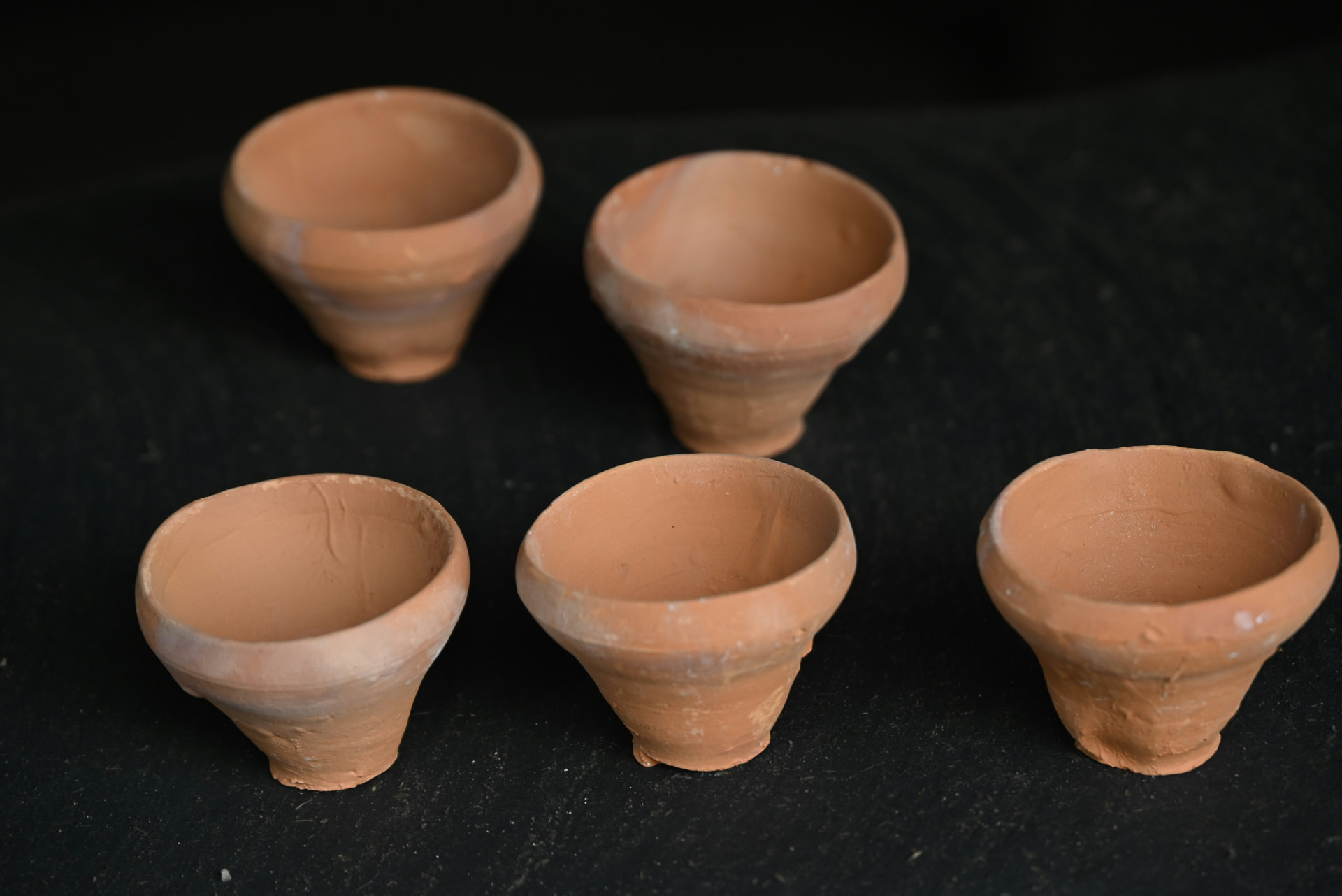
One of my teachers loves asking a deceptively simple question. She would hold up a clay cup and ask the room, "Is this a cup, or is this clay?"
Most of us would answer, "A cup," while a few would quietly mutter, "Clay."
She would nod and continue: "Both are true. But which is more true?"
To which all of us would start second-guessing our answers and thought processes.
Then she'd explain with a knowing smile:
"If we take away the shape of the cup, what remains? Clay. But if we take away the clay, the cup ceases to exist. Without the shape of the cup, the clay can still exist."
What the Cup and Clay Teach Us About Identity
In Vedanta, this illustrates the distinction between satya (absolute truth) and mithya (dependent truth).
The cup is mithya (dependent truth). It certainly exists as a cup, but it depends upon the foundation of the clay to become a cup. Its identity depends upon something more fundamental. The clay is satya (absolute truth). Regardless of whether it becomes a cup, bowl, vase, or sculpture, it remains clay.
The forms change. The essence does not.
Which One Are We? Clay or Cup?
Similarly, we can take many shapes, roles, and functions in our everyday lives. These are our dependent truths. These identities depend on certain relationships and responsibilities to exist.
But when we take away these, what remains? When we take away our roles as a friend, sister, mother, engineer, pilot, caregiver, or spouse, who is left?
Who remains when those roles are stripped away?
Who are you without your job?
Without your achievements?
Without the expectations placed upon you?
Without the pressure to perform?
Who are you beneath the fears, insecurities, and stories you've accumulated over the years?
Who are you at your core?
Who are you as clay?
That is your absolute truth.
What Returning to the Clay Has Looked Like for Me
For me, motherhood has been one place where I've experienced this most vividly.
Like many parents, I found myself consuming endless parenting advice online. There were hacks, routines, sleep strategies, scripts, and opinions about nearly every decision.
Without realizing it, I often acted from fear. Fear of getting it wrong, that I wasn't doing enough, that I myself wasn't enough.
Overtime, as I gain confidence in mothering, I found myself lowering the volume of these online voices so that I can hear my own.
Molding from clay to take on this new form had made me temporarily forget who I am, the clay. The online voices that fed into my self-doubt and fear of becoming this new identity led me away from the absolute truth, that I am one who lives her life by the principles of kindness, slowness, and connection. When I remembered myself as clay, I allowed these truths of me to guide me in mothering.
That, to me, is what remembering and returning to the clay looks like. Not rejecting wisdom from others or pretending we don't need guidance.
But, rather, learning to discern what resonates with our deepest self instead of reacting from insecurity.
How Yoga Helps You Remember Your True Self
What I experienced in motherhood isn't unique. In many ways, it's what all of yoga therapy invites us to practice.
That is why yoga is a practice towards self-realization, rather than a destination to arrive at. It's less about becoming someone new, and more about remembering who we've always been at the core: the clay.
But for now, you can simply peel back the first layers: Who am I without the chronic stress, pressure, and expectations placed upon me? How do I walk through and interact with the world in a way that feels most like me, without the deep inner fears, doubts, and limiting beliefs about myself?
The cup is beautiful. Its shape gives it purpose. But it is never separate from the clay. Our identities are beautiful expressions of who we are, but they are not the whole story.
Our bodies, too, change through every season of life. They may be shaped by pregnancy, aging, illness, surgery, injury, or trauma. They may carry scars, aches, and stories that weren't there before. Like a well-loved cup, they may develop chips and cracks over time.
Yet none of those changes diminish the clay beneath them.
Yoga reminds us that beneath every role we play, every identity we assume, and every change our body experiences, there is something more enduring, something whole that does not disappear when circumstances change.
Coming home to the clay isn't only a philosophical idea. It's also a felt experience, one that restorative yoga and nervous system regulation practices can help you access, especially when burnout has left you feeling far from yourself.
Yoga is not a practice of becoming more, achieving perfection, or constructing a better identity.
It is a practice of remembering.
Remembering that beneath the striving, the fear, the expectations, the labels, and even the changes in our bodies, there is an essential nature that has never been broken.
No matter how weathered the cup becomes, the clay remains whole.
Perhaps that is what yoga ultimately invites us to trust. Not that we must become someone else, but that we can slowly remember who we have been all along.
These are the first simple steps to rediscovering yourself as the clay, and not the cup. The knowledge that you are clay, and not simply limited to being a cup, is the most powerful.
If you'd like more reflections like this, along with practices to help you reconnect with yourself, I'd love to stay in touch.
Join my newsletterComments
Loading comments…
Leave a comment
Your email will not be published. All comments are reviewed before appearing.